 +27 (0) 83 279 8073 | 021 569 5044 (Faster Response)
  info@brandchemicalsupplies.co.za
Packaging Mercury for Air, Sea, and Road Transport: A Complete SEO Guide
Transporting mercury is a highly regulated process due to its toxicity, environmental risks, and hazardous classification. Whether by air, sea, or road, strict packaging and labeling requirements must be followed to ensure safety and compliance with international and national regulations. This detailed SEO guide, brought to you by Brand Chemical Supplies, covers the approved packaging methods, regulatory frameworks, documentation, and best practices for shipping mercury across all major transportation modes.
Why Mercury Transport Requires Special Care
Mercury is classified as a dangerous good (UN 2809: Mercury) because it is toxic, can vaporize at room temperature, and is harmful to both humans and the environment. Improper packaging or handling can lead to spills, exposure, contamination, and significant legal penalties. Compliance with the latest regulations is essential for safe and legal transport.
Regulatory Frameworks for Mercury Transport
International Regulations
- IATA (International Air Transport Association) DGR: Governs air transport of dangerous goods.
- IMDG Code (International Maritime Dangerous Goods Code): Governs maritime/sea transport.
- ADR (European Agreement Concerning the International Carriage of Dangerous Goods by Road): Covers road transport within Europe.
- DOT (U.S. Department of Transportation): Applies to road transport in the United States.
Key Classification
- UN Number: UN 2809 (Mercury)
- Hazard Class: 8 (Corrosive), also toxic
- Packing Group: III (for mercury)
Approved Packaging for Mercury Transport
1. Primary Containers
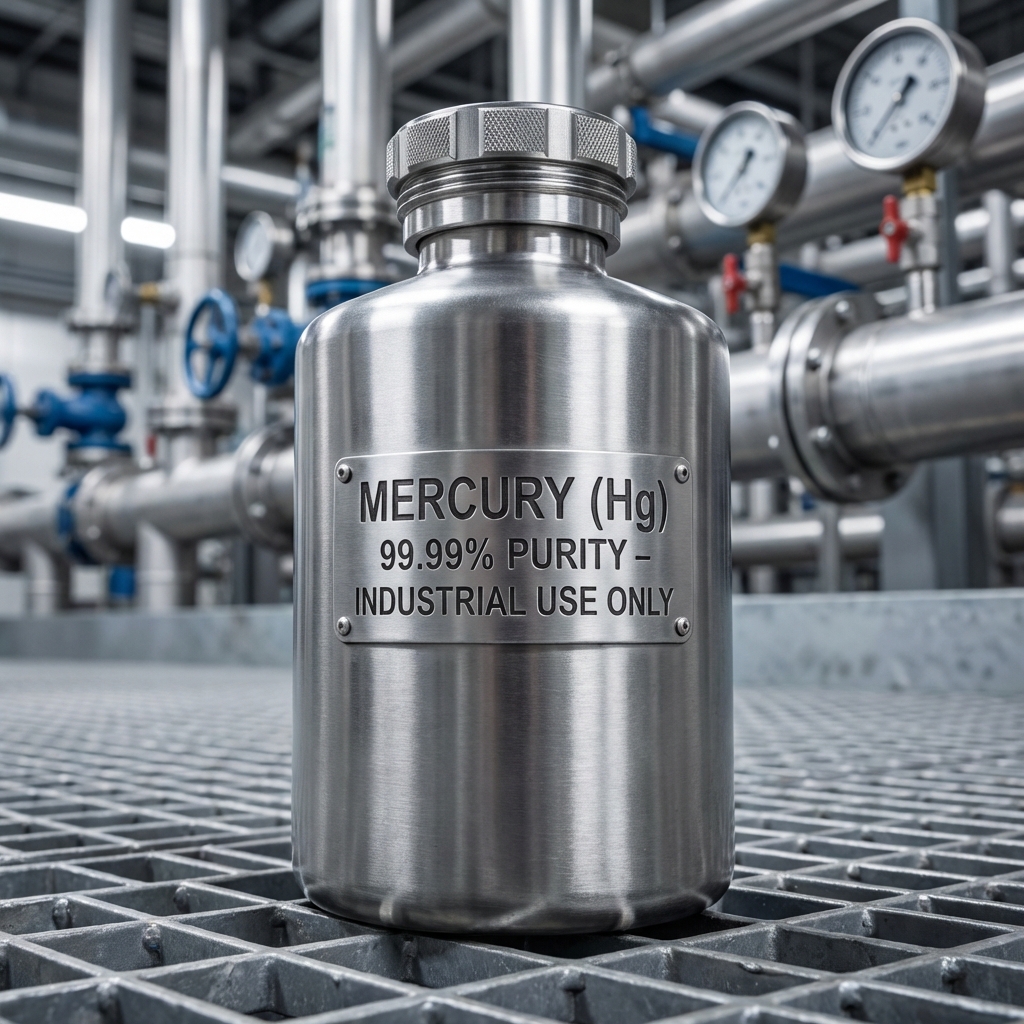
- Iron Flasks or Stainless-Steel Bottles: Mercury must be contained in corrosion-resistant metal containers because mercury can amalgamate with many metals but not with iron or stainless steel. The containers should be airtight, leak-proof, and able to withstand pressure changes.
- High-Density Polyethylene (HDPE) Bottles: For small quantities (laboratory shipments), containers must be UN-approved, leak-proof, and fitted with secure screw caps. Not suitable for bulk shipments.
2. Secondary Containment
- Sealed Poly Bags or Liners: The primary container is placed inside a heavy-duty polyethylene bag or liner, sealed to prevent leaks.
- Absorbent Material: Surround the container with sufficient inert absorbent material (e.g., vermiculite) to soak up the mercury in the event of a spill.
- Rigid Outer Packaging: Place the secondary containment in a UN-certified, rigid outer box or drum. The outer packaging must be robust, puncture-resistant, and able to withstand stacking and accidental impact.
3. Outer Packaging Markings and Labels
- Clearly mark the package with the UN Number (UN 2809), hazard label (Class 8), and proper shipping name (“Mercury”).
- Include orientation arrows and “Toxic” warnings as required.
- Affix all relevant handling and emergency labels for air, sea, or road transport.
4. Special Provisions for Air Transport
- Quantity Limits: Most airlines restrict the amount of mercury per package (often less than by sea or road). Check IATA DGR for current limits.
- Aircraft Type: Mercury is not permitted on passenger aircraft and is usually restricted to cargo aircraft only.
- Pressure Testing: Containers for air transport must be able to withstand pressure changes and must pass leakproofness tests.
5. Sea and Road Transport Notes
- IMDG and ADR Requirements: Larger quantities are allowed, but packaging integrity and labeling are strictly enforced.
- Segregation: Mercury should be segregated from foodstuffs and incompatible substances (like aluminum or copper).
- Stowage: Packages must be secured to prevent movement or damage during transit.
Documentation and Shipping Papers
- Shipper’s Declaration: Required for air and sea transport, detailing the contents, hazard class, UN number, and emergency procedures.
- Material Safety Data Sheet (MSDS/SDS): Must accompany all mercury shipments.
- Transport Emergency Cards (TREMcards): Required for road transport in Europe.
- Consignment Notes and Bills of Lading: Must reflect the dangerous goods status and comply with carrier requirements.
- Import/Export Permits: Some countries require special permits for mercury imports/exports due to environmental controls.
Best Practices for Safe Mercury Packaging and Shipping
- Inspect Containers: Ensure all containers are intact, properly sealed, and free from corrosion.
- Secondary Containment: Always use a secondary containment system and sufficient absorbent material.
- Training: Personnel must be trained in hazardous material handling and emergency response.
- Emergency Kits: Include mercury spill kits and PPE with shipments where feasible.
- Keep Records: Maintain detailed shipment records for regulatory compliance.
Why Choose Brand Chemical Supplies for Mercury Transport Solutions?
Brand Chemical Supplies specializes in hazardous chemical logistics and can assist with:
- Sourcing UN-approved mercury packaging
- Regulatory compliance and documentation
- Expert advice on international and domestic shipments
- Emergency planning and spill response resources
Conclusion
Proper packaging and transport of mercury are non-negotiable for safety and regulatory compliance. By following approved methods for air, sea, and road shipments—using robust containers, secondary containment, proper labeling, and detailed documentation—risks can be minimized. For expert guidance, compliant packaging, and reliable service, Brand Chemical Supplies is your trusted partner in mercury logistics.
mercury packaging, mercury transport, UN 2809, mercury shipping regulations, safe mercury packaging, air transport of mercury, sea transport mercury, road transport mercury, chemical supplies, hazardous materials shipping, Brand Chemical Supplies, mercury logistics