 +27 (0) 83 279 8073 (Faster Response)
  info@brandchemicalsupplies.co.za
Bulk Hydrochloric Acid Drums and Containers Stacked in a South African Warehouse: An In-Depth Guide
Introduction
Hydrochloric acid (HCl), also known as muriatic acid, is one of the most important industrial chemicals globally. Its widespread use across various industries—from mining and metallurgy to food processing, water treatment, and chemical manufacturing—makes it an indispensable chemical for the South African economy. The logistics, safe storage, and bulk supply of hydrochloric acid are complex, requiring specialized knowledge, infrastructure, and adherence to strict safety protocols. In this comprehensive article, we will explore the multifaceted aspects of bulk hydrochloric acid drums and containers stacked in South African warehouses, including supply chain management, regulatory considerations, storage solutions, and the critical role played by reliable suppliers.
Understanding Hydrochloric Acid: Properties and Uses
Hydrochloric acid is a clear, colorless to slightly yellow, highly corrosive liquid with a pungent odor. Its chemical formula, HCl, represents a solution of hydrogen chloride gas dissolved in water. The strength of commercial hydrochloric acid typically ranges from 28% to 38% by weight, with 33% being the most commonly supplied concentration.
Key Industrial Uses
- Mining and Metallurgy: Leaching ores, pickling steel, and pH adjustment.
- Water Treatment: Neutralizing alkalinity, cleaning and disinfecting systems.
- Food Processing: Acidification, processing additives, and sanitization.
- Chemical Manufacturing: Production of chlorides, fertilizers, and dyes.
- Oil and Gas: Well acidizing to enhance petroleum recovery.
The high demand for hydrochloric acid in these sectors has led to a robust market for bulk supply and storage solutions in South Africa.
The Importance of Bulk Hydrochloric Acid Supply in South Africa
South Africa, as a major industrial hub on the African continent, relies heavily on a steady supply of hydrochloric acid. Bulk supply—typically in large drums and intermediate bulk containers (IBCs)—provides several advantages:
- Cost Efficiency: Larger quantities lower per-unit costs and minimize supply interruptions.
- Industrial Scale Operations: Enables continuous production in large facilities.
- Environmental Responsibility: Reduces the frequency of transport, lowering carbon footprint.
The ability to store and distribute hydrochloric acid in bulk is vital for manufacturers, mining companies, water treatment plants, and other end-users across the country.
Types of Bulk Containers for Hydrochloric Acid
1. Drums
- Usually made from high-density polyethylene (HDPE) or specially coated steel to resist corrosion.
- Standard sizes include 200-liter (55-gallon) drums.
- Suitable for moderate volume needs and easy handling.
2. Intermediate Bulk Containers (IBCs)
- Capacity ranges from 1,000 to 1,500 liters.
- Constructed with corrosion-resistant materials, often featuring a steel cage for stability.
- Ideal for large-scale industrial users requiring continuous supply.
3. Bulk Tankers
- Used for the largest volume deliveries, directly transferring acid to on-site storage tanks.
- Require specialized equipment and trained personnel for handling.
Warehouse Storage: Best Practices for Stacking Drums and Containers
Proper warehouse storage is crucial for maintaining hydrochloric acid’s integrity and ensuring safety. South African warehouses adhere to international safety standards and local regulations.
Key Storage Principles
- Segregation: Hydrochloric acid must be stored separately from incompatible substances (e.g., oxidizers, bases, organics).
- Ventilation: Warehouses must be well-ventilated to prevent buildup of fumes.
- Secondary Containment: Floors and storage areas are designed to contain spills.
- Stacking Guidelines:
- Drums are stacked no more than three high on pallets.
- IBCs are stacked according to manufacturer specifications, often one high due to weight.
- Use of racking systems for stability and space optimization.
- Temperature Control: Storage in cool, shaded areas to minimize pressure buildup and container degradation.
Safety Equipment
- Eye wash stations, emergency showers, and spill kits are mandated.
- Personal protective equipment (PPE) for warehouse staff.
Regulatory Compliance in South Africa
Handling and storing hydrochloric acid in bulk is regulated by several national agencies, including the Department of Employment and Labour and the Department of Environmental Affairs. Key regulatory frameworks include:
- Occupational Health and Safety Act (OHSA): Mandates safe handling, labeling, and employee training.
- National Environmental Management Act (NEMA): Addresses spill prevention and environmental protection.
- SANS 10228 & 10229: Standards for packaging, labeling, and transport of hazardous chemicals.
The Supply Chain: From Manufacturer to End User
The hydrochloric acid supply chain in South Africa involves multiple stakeholders:
- Manufacturers: Produce HCl locally or import it in bulk.
- Distributors: Store and transport acid in drums, IBCs, or tankers.
- Logistics Providers: Specialized chemical transport firms with trained drivers and compliant vehicles.
- End Users: Industries requiring hydrochloric acid for their processes.
Each link in this chain must ensure safety, quality, and reliability, as even minor mishandling can lead to hazardous incidents.
Choosing a Reliable Bulk Hydrochloric Acid Supplier in South Africa
Selecting the right supplier is paramount. Consider the following factors:
- Reputation and Track Record: Look for established suppliers with proven reliability.
- Safety Certifications: Compliance with ISO, SANS, and other relevant standards.
- Logistics Capabilities: Ability to deliver on time, nationwide, with emergency response plans in place.
- Technical Support: Expert guidance on handling, storage, and emergency procedures.
- Transparent Documentation: Safety data sheets (SDS), certificates of analysis, and regulatory compliance paperwork.
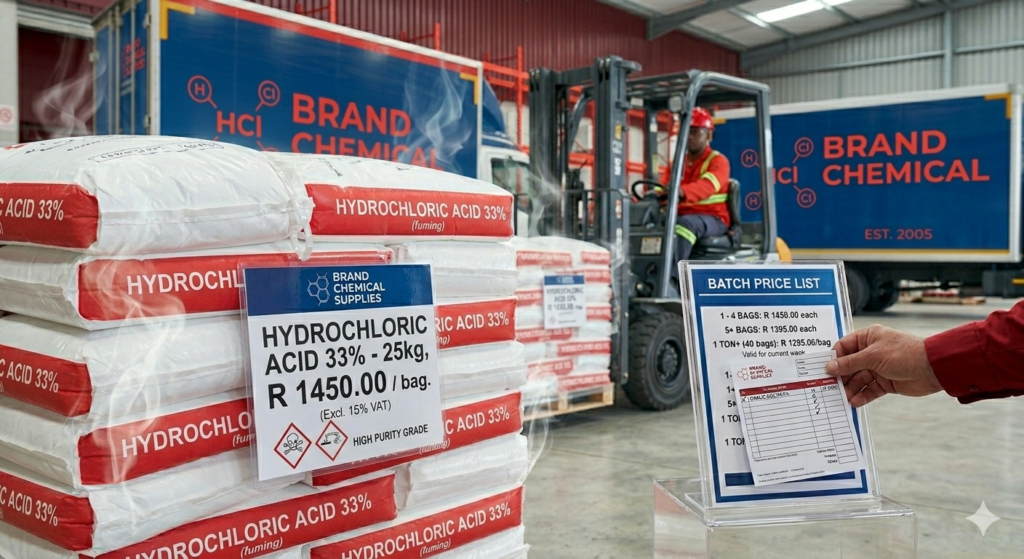
Safety Protocols in Bulk Hydrochloric Acid Storage and Handling
Handling Procedures
- Always use appropriate PPE: acid-resistant gloves, goggles, face shields, and aprons.
- Ensure all staff are trained in chemical handling and emergency response.
- Use only compatible materials for pumps, valves, and transfer lines.
Emergency Response
- Spill response plans and readily accessible spill kits.
- Immediate evacuation and medical response in case of significant exposure.
- Regular drills and safety audits.
Environmental Considerations
Hydrochloric acid spills or leaks can have serious environmental impacts, including soil and water contamination. South African regulations require:
- Secondary Containment Systems: To prevent leaks from reaching the environment.
- Immediate Spill Reporting: To authorities and affected stakeholders.
- Waste Management Protocols: Neutralization and safe disposal of acid waste.
Sustainable practices, such as recycling acid where possible and minimizing waste, are increasingly important for environmentally conscious companies.
Case Studies: Bulk Hydrochloric Acid in South African Industry
1. Mining Sector
South Africa’s mining industry is a major consumer of hydrochloric acid. Bulk deliveries in drums and IBCs ensure continuous supply for mineral extraction and processing. Warehouses near mining sites are engineered for high-volume storage and rapid distribution.
2. Water Treatment Facilities
Municipal water treatment plants across South Africa use hydrochloric acid for pH adjustment and cleaning. Bulk storage minimizes logistical challenges and ensures uninterrupted operations.
3. Manufacturing Plants
Chemical, textile, and food processing plants rely on bulk hydrochloric acid for diverse applications, from cleaning to chemical synthesis. Reliable supply chains and safe storage practices are integral to their success.
Innovations in Bulk Chemical Storage and Logistics
Technological advancements are improving the safety and efficiency of hydrochloric acid storage and distribution:
- Automated Monitoring: Sensors to detect leaks, monitor tank levels, and maintain optimal storage conditions.
- Advanced Materials: Improved drum and IBC linings to resist corrosion and extend lifespan.
- Digital Inventory Systems: Real-time tracking of stock, deliveries, and consumption.
These innovations help South African companies stay competitive and compliant with global best practices.
Frequently Asked Questions (FAQs)
Q: Can hydrochloric acid be stored in metal drums?
A: Only if specially lined or coated. Most commonly, HDPE drums are preferred due to their corrosion resistance.
Q: How long does hydrochloric acid last in storage?
A: When stored properly in airtight containers, hydrochloric acid can remain stable for years, though periodic inspection is recommended.
Q: What should I do in case of a hydrochloric acid spill?
A: Follow your facility’s spill response plan, use neutralizing agents (such as sodium bicarbonate), and report the incident to the relevant authorities.
Q: Can IBCs be stacked?
A: This depends on the manufacturer’s guidelines and the warehouse’s racking system. Typically, one high is the standard due to weight and safety considerations.
Conclusion
Bulk hydrochloric acid supply, storage, and handling are foundational to many of South Africa’s key industries. From the design of modern warehouses with robust safety systems to the selection of reliable suppliers and adherence to regulatory standards, every aspect is critical for safe and efficient operations. By understanding best practices, regulatory requirements, and the benefits of technological advancements, South African businesses can optimize their use of hydrochloric acid while protecting both people and the environment.
Whether you are a manufacturer, distributor, or end-user, investing in quality storage solutions and partnering with reputable suppliers will ensure your operations remain safe, compliant, and successful in South Africa’s dynamic industrial landscape.