 +27 (0) 83 279 8073 (Faster Response)
  info@brandchemicalsupplies.co.za
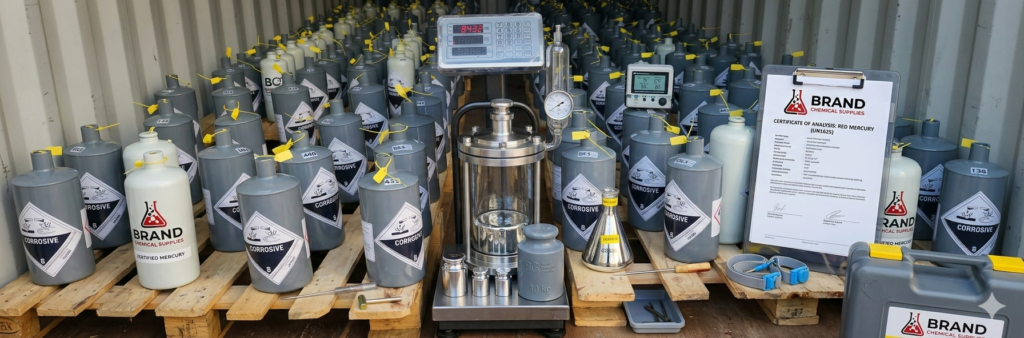
SDS & COA for Mercuric Chloride: Understanding Safety Data Sheets, Certificates of Analysis, Compliance, and Best Practices
Brand Chemical Supplies
Introduction
Mercuric chloride (HgCl₂) is a critical reagent in modern laboratories and industrial settings. Its high toxicity and regulatory scrutiny demand rigorous documentation and safety standards. Two documents—Safety Data Sheet (SDS) and Certificate of Analysis (COA)—are essential for anyone handling, purchasing, or disposing of mercuric chloride. This guide from Brand Chemical Supplies will demystify SDS and COA for mercuric chloride: what they are, why they matter, how to interpret them, and how to ensure compliance and best practices in procurement, handling, and regulatory audits. Whether you’re a lab manager, procurement specialist, or safety officer, this detailed resource will ensure your facility is compliant, safe, and audit-ready.
Section 1: What is Mercuric Chloride?
Mercuric chloride (HgCl₂) is a white, odorless crystalline compound that is highly soluble in water and organic solvents. With applications ranging from analytical chemistry to industrial manufacturing and environmental analysis, it is classified as highly toxic and strictly regulated worldwide.
Key Chemical Data:
- Chemical Formula: HgCl₂
- Molecular Weight: 271.50 g/mol
- Purity (AR/ACS grade): ≥99.5%
- Appearance: White crystalline powder or granule
- Solubility: 7g/100mL in water at 20°C
- Hazards: Toxic by ingestion, inhalation, and skin contact; causes renal, neurological, and systemic damage
Section 2: The Safety Data Sheet (SDS) – Your Essential Safety Tool
What is an SDS?
A Safety Data Sheet (SDS) is a legally required document that provides comprehensive information about a chemical, including its hazards, safe handling, storage, disposal, and emergency procedures. The SDS is standardized globally by the Globally Harmonized System (GHS) and is mandatory for all hazardous chemicals.
Why the SDS Is Important for Mercuric Chloride
- Legal Requirement: OSHA (US), REACH (EU), and other global regulations require an SDS for hazardous chemicals.
- Worker Safety: Informs staff about risks and the correct personal protective equipment (PPE).
- Emergency Response: Guides first responders on spills, exposures, and fire incidents.
- Regulatory Compliance: Auditors and inspectors will require SDS access.
Sections of an SDS for Mercuric Chloride
- Identification – Product, supplier, emergency contacts
- Hazard(s) Identification – GHS/OSHA hazard classification, pictograms, signal words
- Composition/Information on Ingredients – Chemical identity, concentration, impurities
- First-Aid Measures – Guidelines for exposure, ingestion, inhalation, skin, and eye contact
- Fire-Fighting Measures – Suitable extinguishing media, special procedures
- Accidental Release Measures – Spill response, personal precautions, containment
- Handling and Storage – Safe handling and storage requirements
- Exposure Controls/Personal Protection – PPE, ventilation, exposure limits
- Physical and Chemical Properties – Appearance, odor, solubility, melting/boiling points
- Stability and Reactivity – Incompatibilities, stability, hazardous decomposition
- Toxicological Information – Health effects, acute/chronic toxicity
- Ecological Information – Environmental impact, bioaccumulation
- Disposal Considerations – Waste treatment, disposal regulations
- Transport Information – UN number, hazard class, packing group
- Regulatory Information – Applicable laws and regulations
- Other Information – Date of preparation, revision, additional notes
Example: Key SDS Hazards for Mercuric Chloride
- Signal Word: Danger
- Hazard Statements: Toxic if swallowed, inhaled, or in contact with skin. Causes damage to kidneys and nervous system. Very toxic to aquatic life with long lasting effects.
- Pictograms: Skull and crossbones, health hazard, environment
Section 3: The Certificate of Analysis (COA) – Ensuring Quality and Compliance
What is a COA?
A Certificate of Analysis (COA) is a supplier-issued document that certifies the chemical’s identity, purity, and compliance with specified standards (e.g., AR, ACS). It is batch-specific and essential for quality assurance, regulatory compliance, and audit trails.
Why the COA Matters for Mercuric Chloride
- Assures Quality: Confirms purity (≥99.5% for AR/ACS grades) and absence of unacceptable contaminants.
- Meets Regulations: Many labs and industries require COA documentation for audits and certifications.
- Traceability: Links each bottle or batch to production records and supplier responsibility.
- Critical for Analysis: Ensures that analytical results are not compromised by impurities.
What a COA for Mercuric Chloride Should Include
- Product name and chemical formula
- Batch or lot number
- Date of manufacture and analysis
- Purity (e.g., 99.5% minimum)
- Analytical results for trace metals and contaminants (lead, iron, arsenic, etc.)
- Compliance statement (AR, ACS, USP, etc.)
- Testing methods
- Supplier’s name, address, and signature
Example: Key COA Specifications for Mercuric Chloride AR/ACS Grade
- Purity: ≥99.5%
- Lead: ≤0.001%
- Iron: ≤0.0005%
- Arsenic: ≤0.0001%
- Chloride: ≤0.002%
- Moisture: ≤0.05%
Section 4: How to Obtain and Interpret SDS & COA for Mercuric Chloride
1. Sourcing from Certified Suppliers
- Always demand batch-specific COA and up-to-date SDS with every shipment.
- Brand Chemical Supplies provides both documents with AR/ACS grade mercuric chloride.
2. Checklist for Reviewing an SDS
- Correct product identification, hazards, and supplier information
- Up-to-date revision date (review every 1–3 years)
- Detailed PPE and emergency procedures
- Clear handling, storage, and disposal instructions
3. Checklist for Reviewing a COA
- Product matches order (name, grade, batch/lot)
- Purity and contaminant levels meet application standards
- Testing methods and compliance statements are present
- Supplier contact and signature confirm authenticity
4. Documentation Management
- Keep digital and hard copies of SDS and COA accessible to all staff
- File COAs with inventory and batch records for traceability
- Update records with each new batch or delivery
Section 5: Regulatory Compliance and Best Practices
International and National Regulations
- OSHA (US), REACH (EU): Require SDS and quality documentation for hazardous chemicals
- Minamata Convention: Mandates mercury tracking, reporting, and safe handling
- ISO/GLP: Laboratories under ISO 17025 or GLP must maintain SDS/COA for all reagents
Audit Readiness
- Regulatory audits require accessible SDS and COA for all chemicals
- Auditors may verify COA authenticity and match with usage logs
- Non-compliance can lead to fines, shutdowns, or loss of accreditation
Training and Communication
- Train all staff in SDS interpretation, hazard awareness, and safe handling
- Review COA contents with quality control personnel
- Conduct regular drills for spill/emergency response
Section 6: Safe Handling, Storage, and Disposal
Handling
- Wear PPE: gloves, lab coat, goggles, mask/respirator
- Use fume hood or well-ventilated area
- Avoid creating dust or aerosols
Storage
- Store in original, sealed, labeled container
- Secure chemical cabinet, away from incompatible substances
- Restrict access to trained, authorized personnel
Disposal
- Collect all waste in labeled hazardous waste containers
- Arrange disposal through licensed hazardous waste contractors
- Never pour down the drain or discard as regular trash
Section 7: Common Applications Requiring SDS & COA
Analytical Chemistry
- Preparation of calibration standards for mercury analysis in water, food, air, and soil
- Wet chemistry and titrations where trace purity is essential
Laboratory Science
- Protein precipitation, enzyme inhibition, and biochemical assays
- Histology: tissue fixation (Zenker’s, B-5 fixatives)
Environmental and Industrial
- Pollution modeling, remediation research, and mercury detection
- Electronic component and specialty chemical manufacturing
Section 8: Troubleshooting and FAQs
Q: My supplier did not provide a COA. What should I do?
A: Request it immediately. Do not use the chemical until you have batch-specific documentation. Brand Chemical Supplies always provides a COA.
Q: The SDS is outdated. Is it still valid?
A: Best practice is to update SDS every 1–3 years or when regulations change. Request the latest version from your supplier.
Q: How do I verify the authenticity of a COA?
A: Check for batch number, supplier contact, official signature, and cross-reference with inventory/labels.
Q: Are SDS and COA required for audits?
A: Yes, both are mandatory for regulatory, ISO/GLP, and internal audits.
Q: Can I use technical grade mercuric chloride if I have a COA?
A: For analytical, pharmaceutical, or research use, only AR/ACS grade with matching COA/SDS is acceptable.
Section 9: Case Study
A leading environmental testing lab switched to Brand Chemical Supplies for mercuric chloride. They received:
- Batch-specific COA with every bottle
- Updated SDS compliant with GHS and national regulations
- Training for staff on document interpretation and safe use
- Audit support, passing regulatory inspection with zero findings
Result: Improved data integrity, safety, and regulatory compliance.
Section 10: Brand Chemical Supplies – Your Partner for SDS & COA Excellence
Brand Chemical Supplies is a global leader in certified laboratory chemicals, including AR/ACS grade mercuric chloride. Our clients receive:
- Batch-specific COA and up-to-date SDS with all shipments
- Competitive pricing and global delivery
- Regulatory support for audits and compliance
- Expert technical consultation for safe handling and storage
Contact us for quotations, compliance guidance, or documentation samples.
Section 11: Buyer’s Checklist
- Always request batch-specific COA and current SDS
- Verify documentation before use or storage
- Maintain accessible files and update regularly
- Train staff in document interpretation and emergency response
- Ensure disposal methods are compliant and documented
Conclusion
SDS and COA are the foundation of safe, compliant, and scientifically reliable use of mercuric chloride in laboratories and industry. Understanding, demanding, and maintaining these documents is not just a regulatory obligation—it’s a best practice that protects your personnel, your data, and your institution. Brand Chemical Supplies stands as your trusted partner, delivering certified mercuric chloride with complete documentation, support, and expertise for every application.
SDS mercuric chloride, COA mercuric chloride, mercuric chloride AR ACS documentation, safety data sheet mercury compound, certificate of analysis mercury, hazardous chemical compliance, laboratory chemical supplier, Brand Chemical Supplies, mercury chemical regulations, safe handling mercuric chloride, mercury waste disposal, GLP compliance, laboratory audit chemical
For certified mercuric chloride with COA and SDS, compliance support, or global delivery, contact Brand Chemical Supplies today.
If you need meta tags, a summary, or this content divided for your website, just let me know!