 +27 (0) 83 279 8073 (Faster Response)
  info@brandchemicalsupplies.co.za
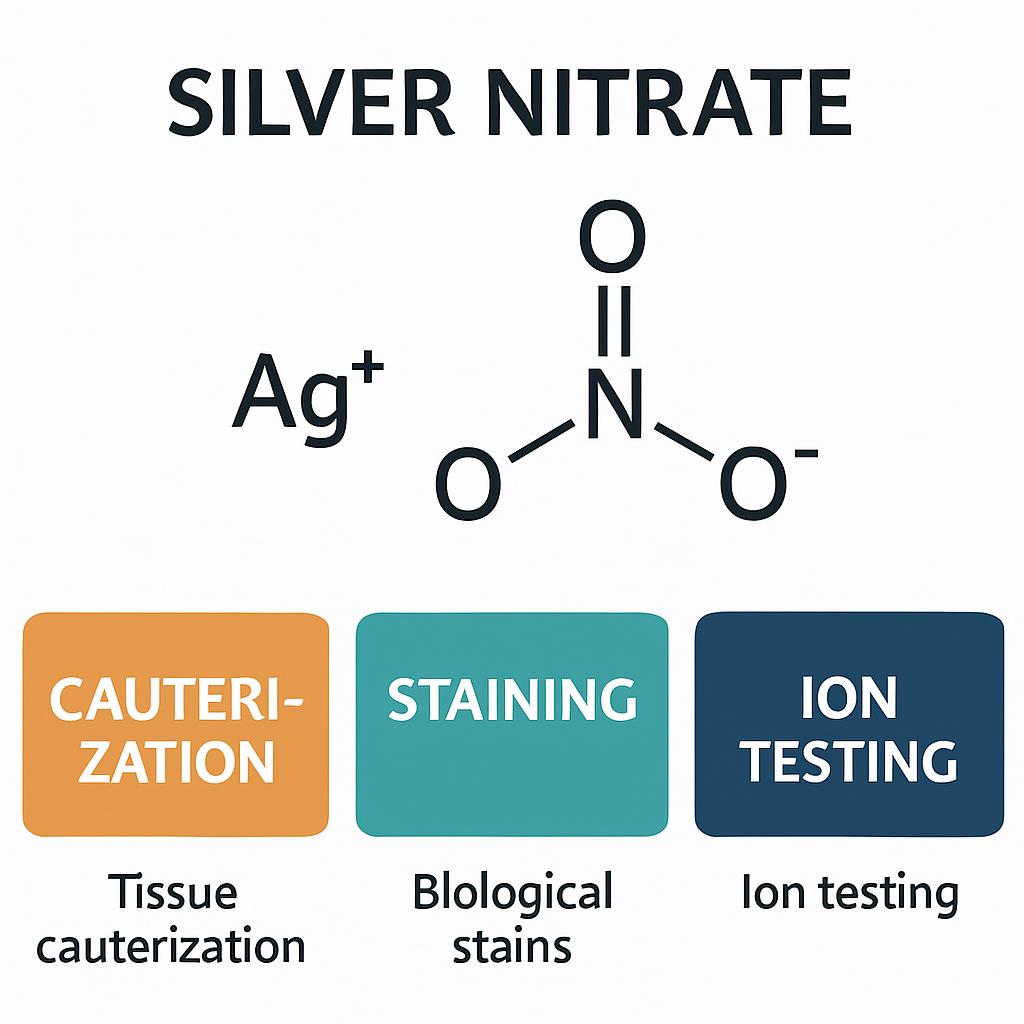
Silver nitrate is a versatile compound used in various applications across medical, laboratory, manufacturing, and biological fields.
Medical Applications
Silver nitrate is commonly utilized to chemically cauterize wounds for hemostasis after procedures like debridement or treatment of hypergranulation tissue. Historically, a 1% silver nitrate solution served as eye drops to prevent eye diseases in newborns whose mothers had certain infectious conditions, notably effective against gonococcal bacteria. However, this practice has now become obsolete, replaced by Erythromycin and Tetracycline. Silver nitrate is also used by dentists in swabs to aid the healing of mouth ulcers and sometimes to remove warts. Caution must be exercised, as silver nitrate is a poison when ingested, causing severe abdominal pain and gastroenteritis, with a lethal dose estimated between 2 to 10 grams.
Laboratory Uses
In laboratory settings, silver nitrate is employed to test for halide ions such as chlorine, bromine, and iodine. The tests yield different colors: white for chloride, pale yellow for bromide, and yellow for iodide. It can also identify carbonate (pale green), hydroxide (brown), sulfide (black), and phosphate ions. Additionally, silver nitrate plays a crucial role in determining the salinity of seawater and assessing chloride levels in water and drilling fluids in oil fields.
Manufacturing Applications
In manufacturing, silver nitrate is involved in the electroplating of silver onto base metals, such as nickel, and in the production of mirrors through the Tollen’s reagent process. It is also found in hair dyes, indelible inks, and even in the formation of explosives like silver fulminate and silver azide. Furthermore, it helps maintain the freshness of cut flowers by inhibiting ethylene production, which causes ripening.
Biological Uses
In biological studies, silver nitrate serves as a stain for proteins and nucleic acids and is used in scanning electron microscopy. It also aids in detecting calcium within tissue samples through methods like Von Kossa’s silver nitrate technique. Moreover, it can effectively control “Silvery Thread Moss” on golf greens when mixed with distilled water.
Safety Note
Always handle silver nitrate with care to avoid skin contact. It is essential to clearly mark any solutions to prevent accidental exposure.