 +27 (0) 83 279 8073 | 021 569 5044 (Faster Response)
  info@brandchemicalsupplies.co.za
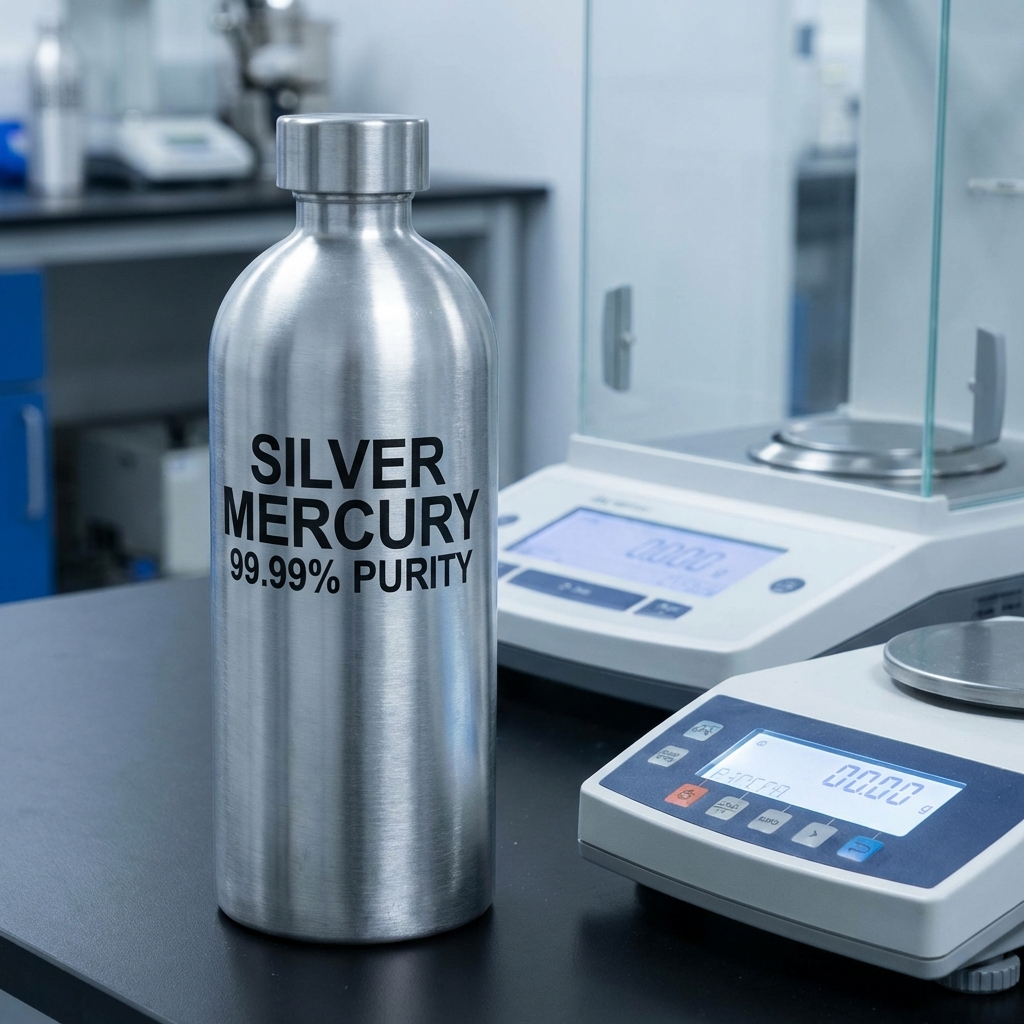
Types of Approved Mercury Storage Containers
1. Iron Flasks
Description:
Iron flasks are the traditional and most commonly approved containers for bulk mercury storage. Mercury does not react with iron, making these flasks ideal for long-term storage and transportation.
Features:
- Made of thick, corrosion-resistant iron
- Airtight screw-cap or welded closures
- Typically painted or coated externally to prevent rust
- Standard sizes range from small bottles to large 34.5-kg (76-lb) flasks
Applications:
Used for transport, industrial storage, and in chemical supply chains.
2. High-Density Polyethylene (HDPE) Bottles
Description:
HDPE bottles are suitable for smaller quantities of mercury and are widely used in laboratories and educational settings.
Features:
- Chemically resistant to mercury
- Leak-proof, tight-fitting screw caps
- Lightweight and shatter-resistant
- Available in various sizes
Applications:
Short-term storage, laboratory use, and sample collection.
3. Glass Bottles (with Cautions)
Description:
While mercury does not wet glass or react chemically with it, glass is breakable. Glass containers are usually reserved for very small amounts of mercury and always require secondary containment.
Features:
- Chemically inert to mercury
- Must have tight, secure lids (preferably PTFE-lined)
- Require storage in protective secondary containers (e.g., plastic trays)
Applications:
Temporary storage of small mercury quantities, chemical analysis.
4. Stainless Steel Containers
Description:
Stainless steel containers are used in specialized or high-security environments.
Features:
- Highly durable and corrosion-resistant
- Secure, gasketed lids
- Resistant to both chemical and physical damage
Applications:
Industrial, research, or regulatory environments where maximum durability is required.
Key Best Practices for Mercury Storage
- Label Clearly: All containers must be clearly labeled “Mercury” and include hazard warnings.
- Secondary Containment: Store mercury containers within larger, non-reactive trays or tubs to catch any spills.
- Keep Sealed: Ensure containers are airtight to prevent mercury vapor release.
- Avoid Aluminum or Copper: Never use containers made from aluminum or copper, as mercury can amalgamate with these metals, causing leaks.
- Regular Inspection: Frequently check containers for signs of corrosion, damage, or leaks.
- Temperature Stability: Store mercury at stable, moderate temperatures to prevent pressure build-up.
Regulatory Compliance
Always follow local, state, and federal regulations (such as EPA and OSHA guidelines in the United States) regarding mercury storage, labeling, and transportation. Only use containers approved by relevant authorities for hazardous material storage.
mercury storage containers, approved mercury flasks, HDPE mercury bottles, safe mercury storage, laboratory mercury safety, chemical storage regulations, iron flasks for mercury, mercury spill prevention
If you need high-quality, approved mercury storage containers or expert advice on safe mercury handling, Brand Chemical Supplies can assist with sourcing and compliance guidance.