 +27 (0) 83 279 8073 | 021 569 5044 (Faster Response)
  info@brandchemicalsupplies.co.za
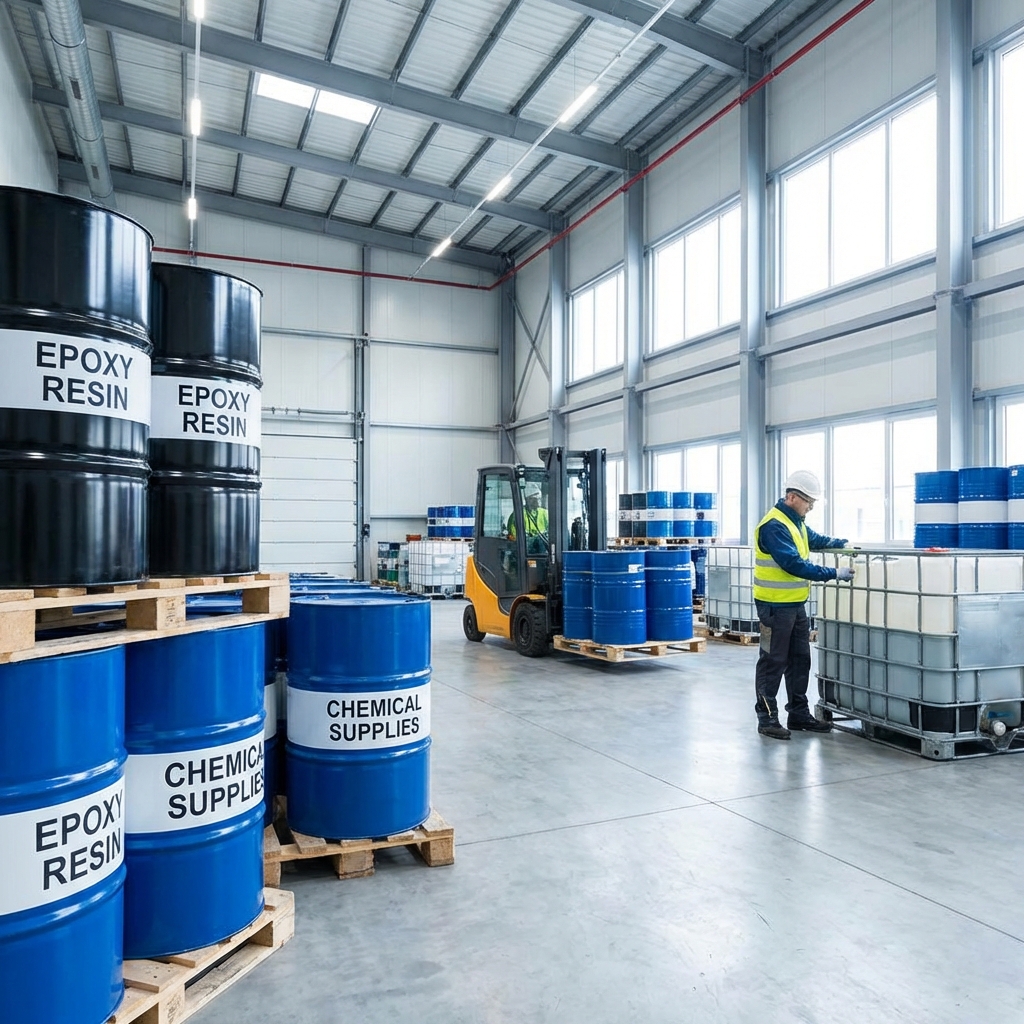
Epoxy Resins as Bonding Matrix in South Africa 2026 – Explore how epoxy resins are revolutionizing bonding matrix applications across South Africa in 2026.
Epoxy resins have long been recognized for their superior bonding capabilities and versatility across multiple industries. In South Africa, by 2026, the application of epoxy resins as bonding matrices has seen significant advancements, driven by evolving technology, sustainability demands, and the need for high-performance materials in a rapidly developing market. This article presents an in-depth exploration of epoxy resins used as bonding matrices, with special focus on their roles, benefits, considerations, and future trends in South Africa.
What is an Epoxy Resin Bonding Matrix?
A bonding matrix is a continuous phase that holds and binds together reinforcement materials, such as fibers, fillers, or aggregates. In composite materials, the matrix serves to transfer loads between fibers, protect them from environmental damage, and provide overall shape and integrity. Epoxy resins, due to their chemical structure, mechanical strength, and durability, are among the most preferred matrices in a variety of bonding applications.
Key Properties of Epoxy Resins as Matrices
Epoxy resins used as bonding matrices are prized for several attributes:
- High Adhesive Strength: They form robust bonds with a wide range of substrates, including metals, concrete, glass, ceramics, and plastics.
- Chemical Resistance: Epoxy resins are highly resistant to moisture, acids, alkalis, and solvents, making them ideal for harsh environments.
- Thermal Stability: Many advanced epoxy systems retain their mechanical properties at elevated temperatures, crucial for demanding structural uses.
- Low Shrinkage: Limited volumetric changes during curing minimize the risk of stress cracks and dimensional instability.
- Versatility in Formulation: Epoxy matrices can be tailored using various hardeners, fillers, and additives to suit specific project needs.
Applications in South Africa (2026)
1. Construction Sector
South Africa’s construction industry continues to grow, with increasing demand for repair, strengthening, and retrofitting solutions. Epoxy resin matrices are widely used in:
- Carbon Fiber Reinforced Polymers (CFRP): For structural strengthening of bridges, buildings, and infrastructure.
- Anchoring Systems: Bonding steel rods or bolts into concrete or rock for load-bearing support.
- Flooring Systems: As a binder for decorative and industrial flooring, providing chemical and wear resistance.
2. Automotive and Transport
The shift toward lightweight, fuel-efficient vehicles has accelerated the use of composite materials. Epoxy matrices are essential in:
- Composite Body Panels: Offering superior strength-to-weight ratios in car and truck components.
- Adhesive Bonding: Used in place of traditional welding or mechanical fasteners to reduce weight and improve energy absorption.
3. Aerospace and Defense
South African aerospace manufacturers leverage epoxy matrices for:
- Advanced Composites: In aircraft structures where high strength and low weight are critical.
- Protective Coatings: Epoxy-based coatings for corrosion resistance and durability.
4. Renewable Energy
With the country’s focus on green energy, epoxy bonding matrices find roles in:
- Wind Turbine Blades: Providing strength, flexibility, and weather resistance.
- Solar Panel Encapsulation: Ensuring long-term protection and adherence of components.
5. Marine and Industrial Applications
Epoxy resins are invaluable in:
- Boat Building and Repair: Superior water resistance and bonding of fiberglass reinforcements.
- Industrial Equipment: As a matrix in chemical-resistant linings and repairs for tanks, pipes, and machinery.
Client Needs and Market Trends in 2026
Sustainability and Low VOC Formulations
There is a major shift toward sustainable and environmentally friendly products. South African clients increasingly request low-VOC (volatile organic compound) and bio-based epoxy matrices. Manufacturers now offer advanced formulations that maintain performance while minimizing environmental impact.
Enhanced Performance and Customization
Different industries require tailored solutions. Epoxy suppliers provide custom matrix systems designed for specific mechanical, thermal, or chemical resistance profiles, ensuring optimal performance for every application.
Clarity and Technical Support
Clients in 2026 expect detailed technical documentation, on-site support, and clear communication from suppliers. Companies like Brand Chemical Supplies lead by offering transparent product information, safety data, and responsive service.
Selection Criteria: How to Choose the Right Epoxy Matrix
- Compatibility: Ensure the matrix is compatible with the reinforcement and substrate.
- Cure Time: Different applications require varying cure speeds—fast cure for repairs, slower for large-scale lamination.
- Mechanical Performance: Evaluate strength, flexibility, and fatigue resistance.
- Environmental Resistance: Consider exposure to chemicals, moisture, UV, and temperature extremes.
- Regulatory Compliance: Opt for products that meet South African and international safety and environmental standards.
Future Directions and Innovations
By 2026, the South African market is witnessing innovations such as:
- Self-Healing Epoxy Matrices: Incorporating microcapsules that release healing agents upon crack formation.
- Smart Composites: Embedding sensors within epoxy matrices for structural health monitoring.
- 3D Printing with Epoxy Systems: Enabling custom, complex shapes for industrial and architectural uses.
Conclusion
Epoxy resins as bonding matrices are integral to the progress of multiple South African industries in 2026. Their unique combination of strength, chemical resistance, and adaptability ensures they remain the material of choice for demanding applications. As sustainability, customization, and performance continue to drive client needs, leading suppliers like Brand Chemical Supplies are poised to support innovation and growth with advanced epoxy matrix solutions.
Whether you are in construction, automotive, aerospace, energy, or marine industries, understanding the capabilities and selection criteria for epoxy resin matrices empowers you to make informed decisions and achieve superior results in your projects.
epoxy resin, bonding matrix, South Africa, 2026, composite materials, construction, automotive, aerospace, renewable energy, marine industry, epoxy applications, structural adhesives, chemical resistance, high strength, Brand Chemical Supplies, low VOC, sustainability, technical support, matrix selection, innovation, self-healing epoxy