 +27 (0) 83 279 8073 | 021 569 5044 (Faster Response)
  info@brandchemicalsupplies.co.za
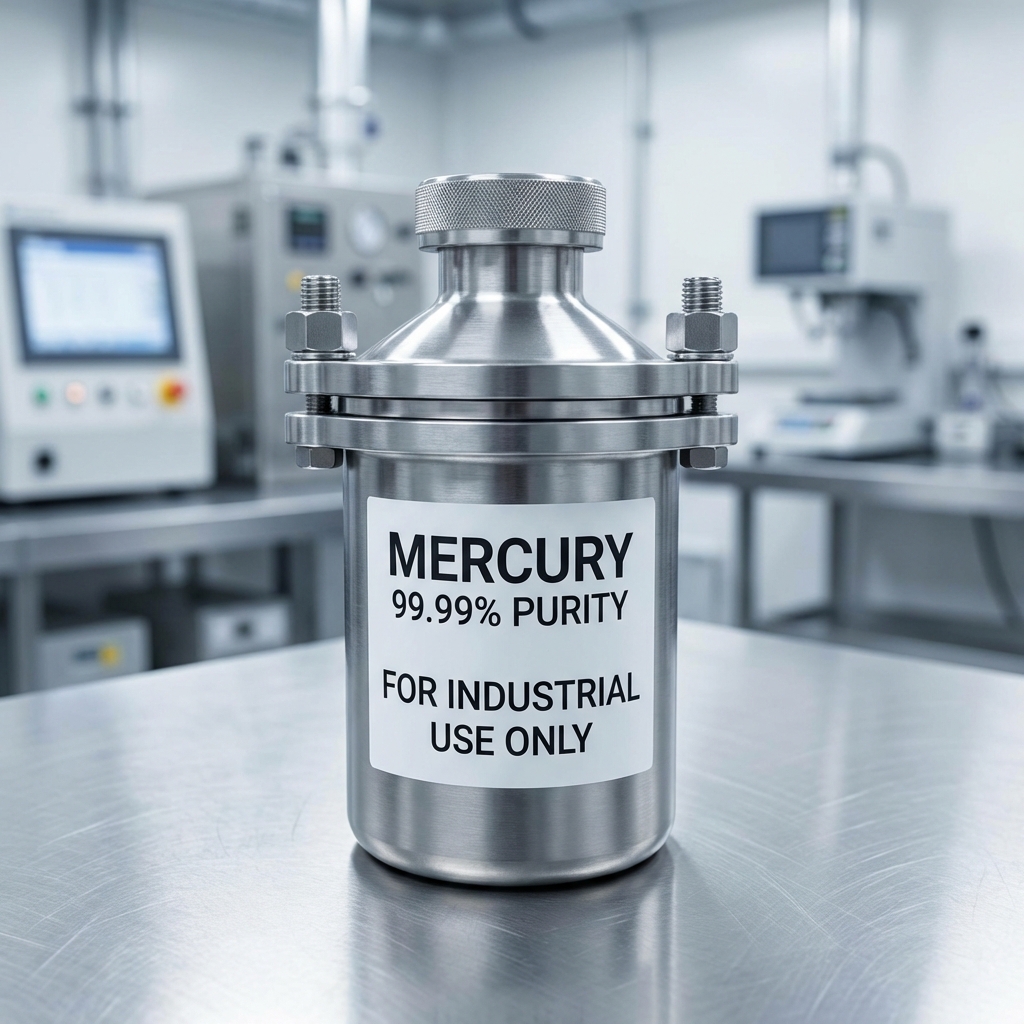
Comparison of Mercury Prices by Purity Levels
Mercury, widely used in scientific, industrial, and artisanal applications, is traded in various grades of purity. The price of mercury is closely tied to its purity level, with higher-purity mercury commanding premium prices due to its suitability for sensitive uses. This article examines how mercury prices differ based on purity and the factors driving these variations.
Understanding Mercury Purity Grades
- Technical Grade (99.0%–99.5%)
- Used in artisanal gold mining, some industrial processes, and less sensitive applications.
- High Purity (99.9%–99.99%)
- Required for laboratory work, scientific instruments, and certain medical devices.
- Ultra-High Purity (≥99.999%)
- Essential for advanced electronics, research, and precision analytical equipment.
Price Differences by Purity
- Technical Grade Mercury:
- Lowest price point due to less stringent refining; often sold in bulk for industrial and mining use.
- Price fluctuations are more sensitive to changes in supply from mining or recycling.
- High Purity Mercury:
- Commands a moderate premium over technical grade.
- Pricing reflects the additional costs of purification and quality control.
- Market is smaller, with demand driven by research and specialized manufacturing.
- Ultra-High Purity Mercury:
- Significant premium due to the complexity and expense of achieving extreme purity levels.
- Used in highly specialized applications where trace contaminants must be avoided.
- Prices for this grade are less volatile, as supply is tightly controlled and demand is steady but limited.
Factors Influencing Price Gaps
- Refining and Production Costs:
- Higher purity requires advanced technology, more processing steps, and strict quality assurance, increasing costs and market prices.
- Demand by Application:
- Technical grade mercury sees bulk demand from mining sectors; high and ultra-high purity grades are sought after by scientific and manufacturing sectors.
- Regulatory Environment:
- Regulations may restrict use or import of lower-purity mercury, pushing buyers toward purer (and pricier) grades.
- Supply Chain Constraints:
- Limited global producers for ultra-high purity mercury can lead to supply bottlenecks and higher prices.
Market Examples (Indicative Data)
- Technical grade mercury might sell for $30–$50 per kilogram.
- High purity mercury can reach $50–$100 per kilogram, depending on market and region.
- Ultra-high purity mercury often exceeds $150 per kilogram, with prices varying based on specification and supplier.
Conclusion
Mercury prices increase significantly with higher purity levels, reflecting the cost and complexity of refining, regulatory requirements, and the specialized nature of end uses. Buyers should assess their application needs and regulatory environment when sourcing mercury at different purity grades.
mercury price by purity, mercury purity comparison, high purity mercury price, ultra-high purity mercury, technical grade mercury, mercury price chart, mercury purity levels, mercury market analysis, mercury industrial uses, mercury grade pricing.